TB6612FNG Dual DC Motor Driver Module For Two Motors With 1.2A Continuous And 3.2A Peak Current, CW CCW, Short Brake, Over Current Protection, A Beefed Up Upgrade Over L298N For Robotics Projects
✔️ 1.2A continuous / 3.2A peak per channel, CW/CCW control
Compact dual motor driver for hobby robotics, offering a beefed up upgrade over L298N. It powers two DC motors from a microcontroller with protection and simple direction control, great for Arduino or microcontroller projects.
✅ Output current per channel: 1.2A continuous; 3.2A peak✅ VM up to 15V; VCC 2.7-5.5V input compatibility
✅ Protection: over-current, short-circuit, under voltage lockout, over temperature
✅ Control: CW/CCW, brake and stop modes for precise motion
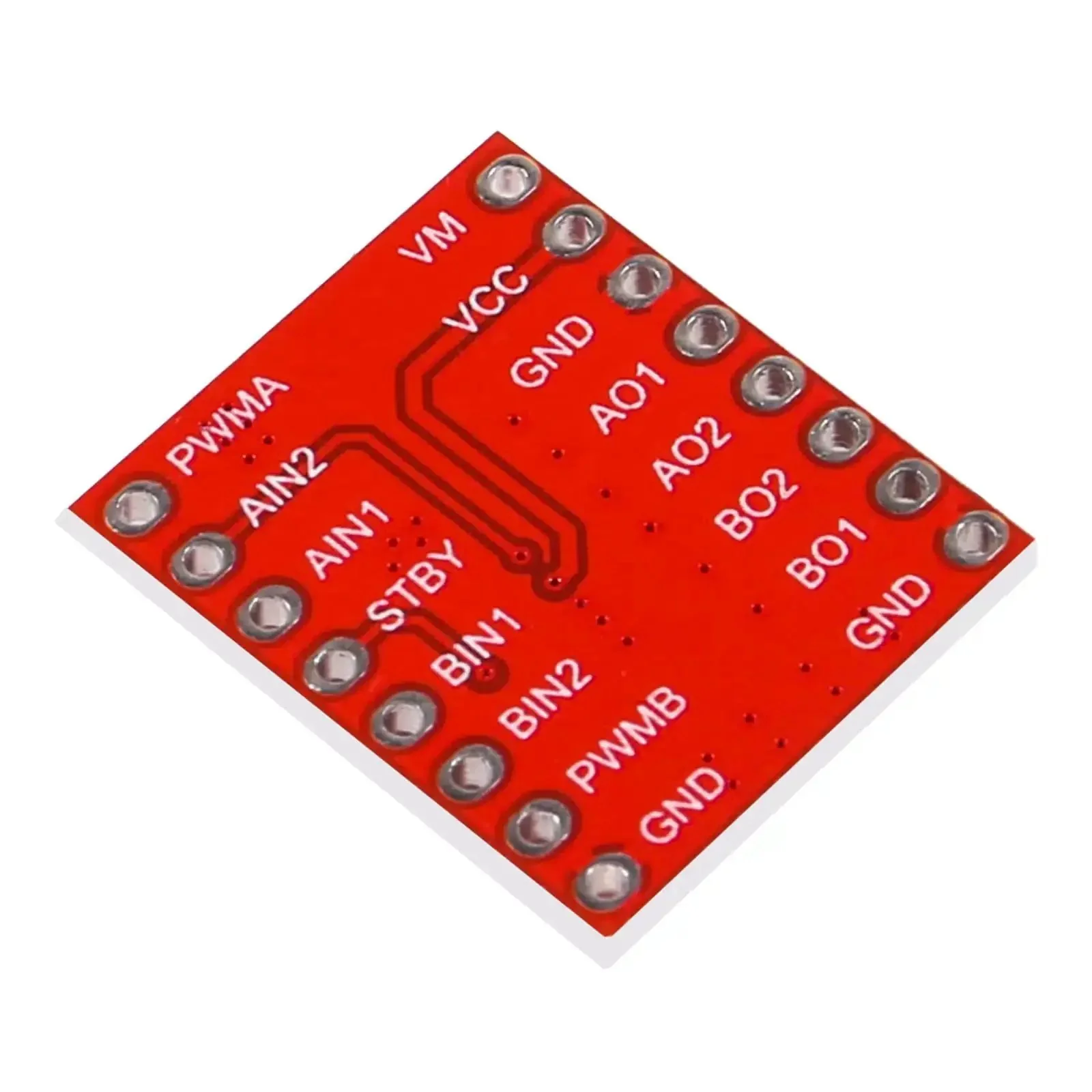
✅ Pinout: two 0.1" headers, inputs on one side, outputs on the other
💡 What is a motor driver module used for in hobby robotics and DIY projects? This handy device lets you safely drive two DC motors from a microcontroller while handling current, voltage, and motion control.
- It converts microcontroller signals into motor power with proper current handling
- It provides directional control (CW/CCW) and braking for simple motion
- It protects the system with over-current, UVLO, and thermal shutdown features
- It simplifies wiring with clearly separated input and output headers
Product Information
Product Information
Shipping & Returns
Shipping & Returns




TB6612FNG Dual DC Motor Driver Module For Two Motors With 1.2A Continuous And 3.2A Peak Current, CW CCW, Short Brake, Over Current Protection, A Beefed Up Upgrade Over L298N For Robotics Projects
TB6612FNG Dual DC Motor Driver Module For Two Motors With 1.2A Continuous And 3.2A Peak Current, CW CCW, Short Brake, Over Current Protection, A Beefed Up Upgrade Over L298N For Robotics Projects
✔️ 1.2A continuous / 3.2A peak per channel, CW/CCW control
Compact dual motor driver for hobby robotics, offering a beefed up upgrade over L298N. It powers two DC motors from a microcontroller with protection and simple direction control, great for Arduino or microcontroller projects.
✅ Output current per channel: 1.2A continuous; 3.2A peak✅ VM up to 15V; VCC 2.7-5.5V input compatibility
✅ Protection: over-current, short-circuit, under voltage lockout, over temperature
✅ Control: CW/CCW, brake and stop modes for precise motion
✅ Pinout: two 0.1" headers, inputs on one side, outputs on the other
💡 What is a motor driver module used for in hobby robotics and DIY projects? This handy device lets you safely drive two DC motors from a microcontroller while handling current, voltage, and motion control.
- It converts microcontroller signals into motor power with proper current handling
- It provides directional control (CW/CCW) and braking for simple motion
- It protects the system with over-current, UVLO, and thermal shutdown features
- It simplifies wiring with clearly separated input and output headers
Original: $19.79
-65%$19.79
$6.93Product Information
Product Information
Shipping & Returns
Shipping & Returns
Description
✔️ 1.2A continuous / 3.2A peak per channel, CW/CCW control
Compact dual motor driver for hobby robotics, offering a beefed up upgrade over L298N. It powers two DC motors from a microcontroller with protection and simple direction control, great for Arduino or microcontroller projects.
✅ Output current per channel: 1.2A continuous; 3.2A peak✅ VM up to 15V; VCC 2.7-5.5V input compatibility
✅ Protection: over-current, short-circuit, under voltage lockout, over temperature
✅ Control: CW/CCW, brake and stop modes for precise motion
✅ Pinout: two 0.1" headers, inputs on one side, outputs on the other
💡 What is a motor driver module used for in hobby robotics and DIY projects? This handy device lets you safely drive two DC motors from a microcontroller while handling current, voltage, and motion control.
- It converts microcontroller signals into motor power with proper current handling
- It provides directional control (CW/CCW) and braking for simple motion
- It protects the system with over-current, UVLO, and thermal shutdown features
- It simplifies wiring with clearly separated input and output headers